

Government Affairs
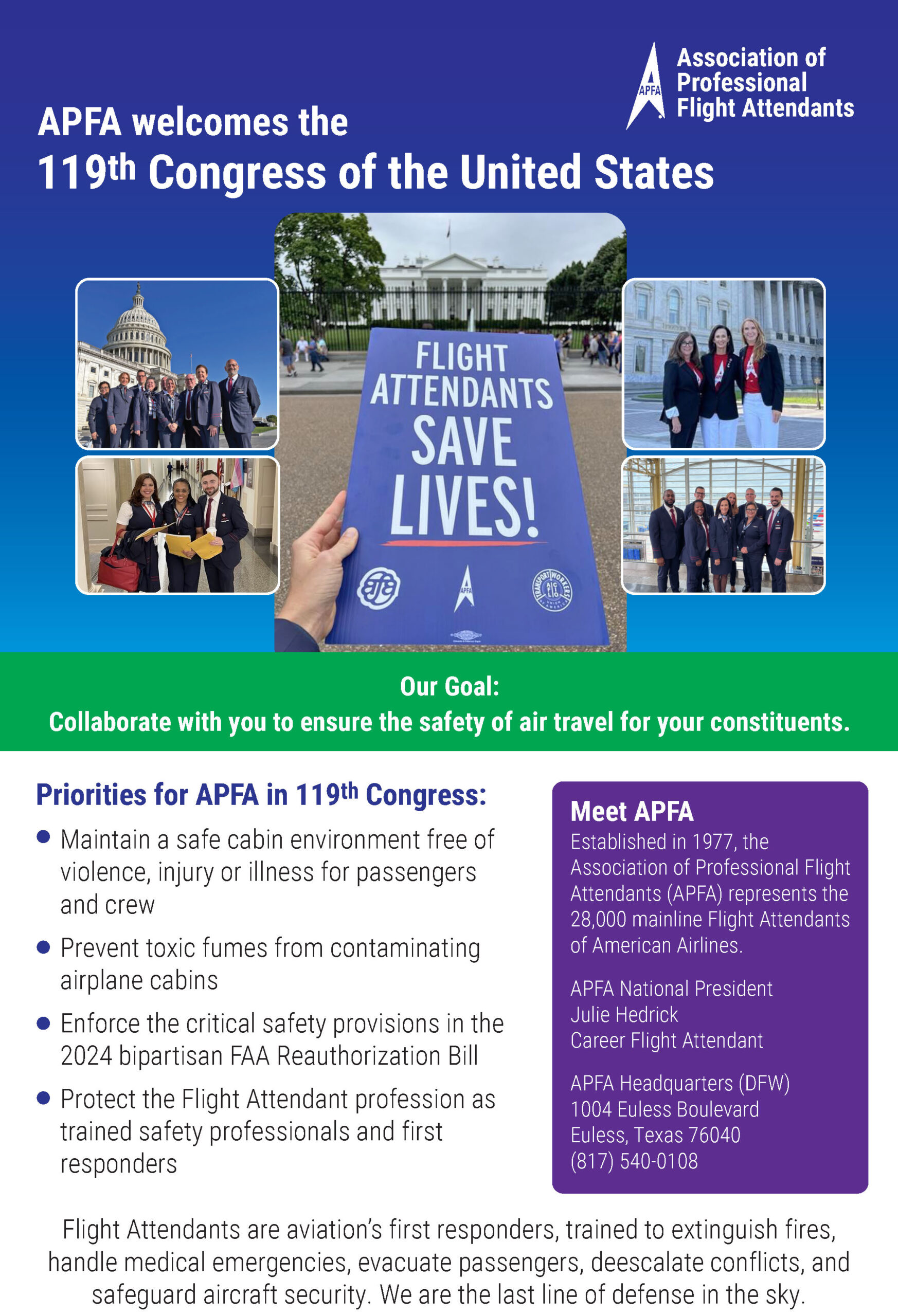
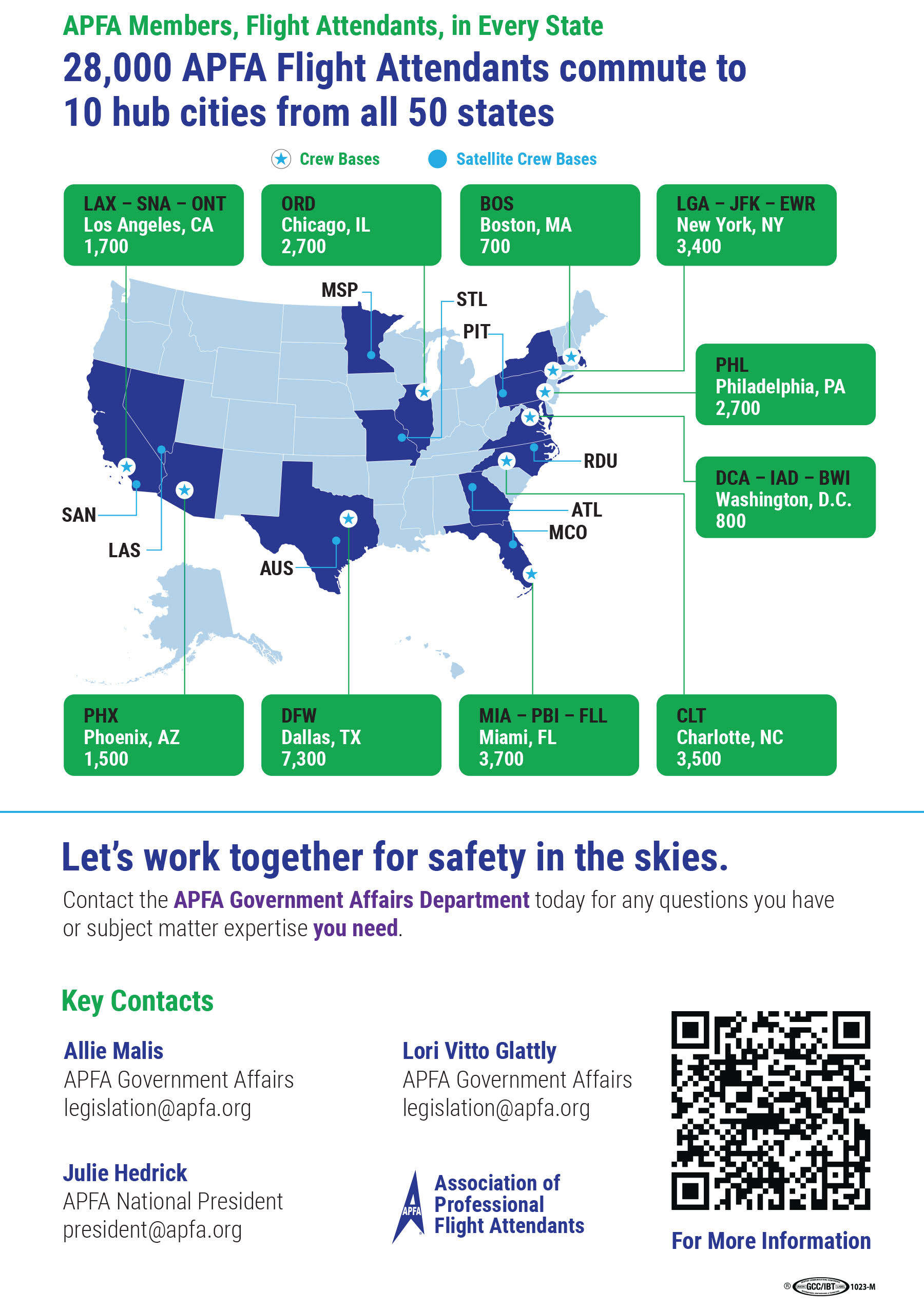
The APFA Government Affairs Department is your advocate on Capitol Hill. Our top priorities are always the issues that are most important to Flight Attendants, such as job security and workplace safety.
The aviation industry is highly regulated, so what happens in the halls of Congress directly impacts our work environment on a daily basis. This is why our Union must stay involved in federal, state, and even local level issues.
The relationships that APFA cultivates with members of Congress and other government officials allow our Union to promote our profession and raise our concerns. The APFA Government Affairs Department meets face-to-face with lawmakers and their staff. With so many voices in Washington, it is important that lawmakers hear directly from us as Flight Attendants.
If you are interested in learning more about the APFA Government Affairs Department and what we are fighting for, send an email to [email protected] or Contact Government Affairs.
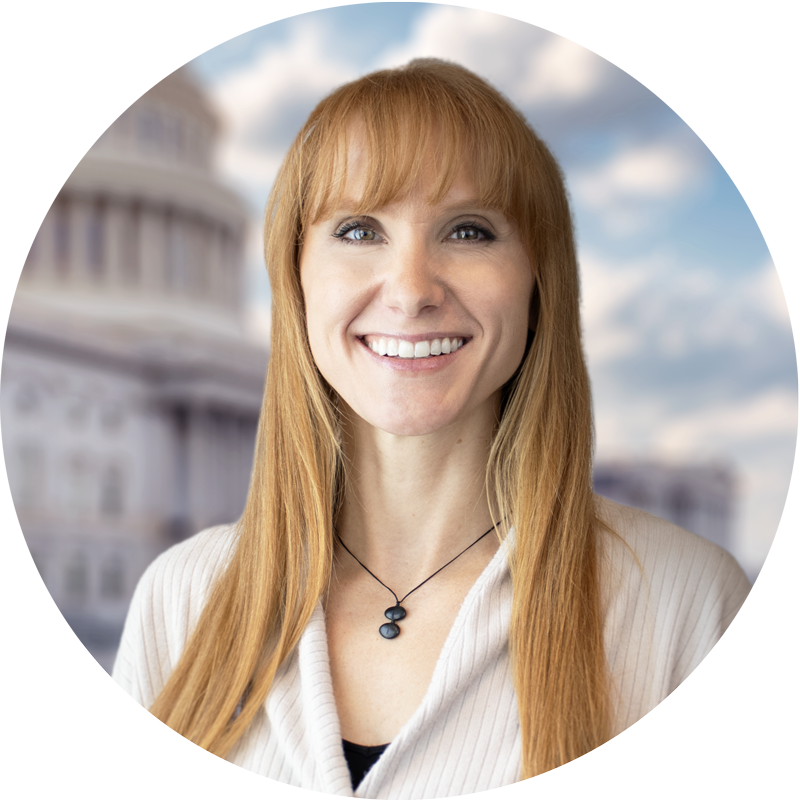
Allie Malis
APFA Government Affairs Representative
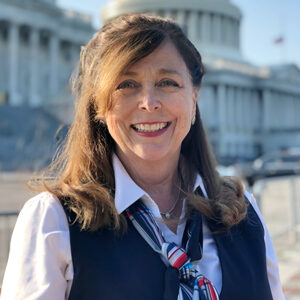
Lori Glattly
APFA Government Affairs Representative
Government Affairs Hotlines
10.23.25 – Federal Government Shutdown Entering Fourth Week
As we enter the 23rd day of the shutdown, now the second-longest in U.S. history, 13,000 air traffic controllers and 50,000 Transportation Security Administration (TSA) officers are working without pay.
10.13.25 – APFA Leads the Push for Stronger Minimum Crew Standards on Capitol Hill
APFA Representatives were on Capitol Hill last week meeting with Members of the U.S. House of Representatives, including those on the Transportation and Infrastructure (T&I) Committee, the Aviation Subcommittee, and the Aviation Safety Caucus.
10.01.25 – Funding Lapse Results in Federal Government Shutdown
Congress and the White House have failed to fund the government, and as of today the federal government is now shut down. Flight Attendants work in a highly-regulated industry that depends on government workers being able to perform their job duties.
8.20.25 – APFA Endorses the Safe Air on Airplanes Act; Joins U.S. Rep Frost for Roundtable Discussion
APFA strongly supports the Safe Air on Airplanes Act, reintroduced this week by Rep. Maxwell Frost (D-FL-10), which would phase out the bleed air systems that currently exist on almost all commercial aircraft types.
8.13.25 – Hot Cabin Report Form and National Academies Study on Aircraft Cabin Temperature
As Flight Attendants, we are responsible for keeping our passengers—and ourselves—safe. During the summer, aircraft systems like the Auxiliary Power Unit (APU) may be overworked, and as a result, inoperative throughout summer flying.
8.06.25 – Lawmakers Press FAA on Updated Standards after Evacuation of AA3023 – Take Action Today
On Saturday, July 26, 2025, American Airlines Flight 3023 experienced a landing gear fire during takeoff from Denver International Airport, prompting an aborted takeoff and emergency evacuation on the runway.
7.28.25 – Safety First – One Flight Attendant Per Widebody Door
APFA continues to sound the alarm regarding the recently recertified 787-9P, which is now operated with a minimum crew of just seven (7) Flight Attendants. For the safety of passengers in an emergency evacuation, a Flight Attendant must be present
3.08.25 – AFGE-TSA Collective Bargaining Rights Under Attack
AFGE-TSA Collective Bargaining Rights Under Attack Saturday, March 8, 2025 APFA, standing alongside our Union Siblings at AFGE, is outraged by the reckless decision to terminate the labor agreement and violate the…
As we enter the 23rd day of the shutdown, now the second-longest in U.S. history, 13,000 air traffic controllers and 50,000 Transportation Security Administration (TSA) officers are working without pay.
APFA Representatives were on Capitol Hill last week meeting with Members of the U.S. House of Representatives, including those on the Transportation and Infrastructure (T&I) Committee, the Aviation Subcommittee, and the Aviation Safety Caucus.
Congress and the White House have failed to fund the government, and as of today the federal government is now shut down. Flight Attendants work in a highly-regulated industry that depends on government workers being able to perform their job duties.
APFA PAC
The APFA PAC plays a very important role in getting our voice heard!
Representatives and Senators must be kept informed if they are to get involved at any point. By attending campaign fundraising events, APFA has an opportunity to speak directly to members of Congress, not just to their staff, in order to explain APFA's position on important issues.
Legislation
Unruly Passengers
Flight Attendants should not have to fear for their safety just by coming to work. A federal "No-Fly" list would keep abusive passengers off our airplanes. Learn More
Cabin Air Quality
When toxic fumes enter the cabin air supply, Flight Attendants and passengers are put at risk. Yet little has been done to regulate this issue. We need onboard sensors, standardized reporting, and comprehensive training to prevent these incidents from happening. Learn More
Emergency Evacuation Standards
Congress must require that the FAA conduct a legitimate airplane evacuation study to update its standards using an actual aircraft (and different aircraft bodies), include all types of participants, factor in the current aircraft seat dimensions, carry-on baggage, emotional support animals, and passenger behaviors to reach an accurate conclusion about its evacuation standards. Learn More
Cabin Temperature Standards
We need temperature standards on the airplane! It’s too hot, it’s too cold, it’s UNSAFE. The American Society of Heating, Refrigerating, and Air Conditioning Engineers (ASHRAE) state that onboard temperatures should be between 65-80 degrees on the ground. Learn More
Radiation
Flight Attendants are exposed to high level of radiation due to the amount of time we fly. Research and education must be done to mitigate this workplace risk and require airlines to educate Flight Attendants about the risks of radiation. In addition, we would like the FAA to conduct a study on the risks of cosmic radiation to Flight Attendants’ health and potential solutions. Learn More
Flags of Convenience
We must protect U.S. aviation jobs from being outsourced. “Flag of convenience” business models use the weakest legal, regulatory, labor, and safety practices from other countries. Let’s prevent a race to the bottom. Learn More
Workplace Safety
Lawmaker Contact Information
APFA Headquarters
1004 West Euless Boulevard
Euless, Texas 76040
M-F: 9:00AM - 5:00PM (CT)
Phone: (817) 540-0108
Contract & Scheduling Desk
M-Th: 9:00AM - 5:00PM (CT)
Phone: (817) 540-0108
Live Chat Messaging
Fridays: 9:00AM - 5:00PM (CT)
Currently, no scheduled events...
Support
Contact APFA
Website Feedback
Privacy Policy
Terms of Service
Jobs